
Mesa County Criminal Court Cases
Mesa County forms Colorado's 21st Judicial District. The Mesa County Combined Court places District Court and County Court functions at the Justice Center. District Court hears felonies. County Court handles misdemeanors and traffic matters within its statutory reach. The combined clerk keeps Registers of Actions, pleadings, orders, copies, and certifications for those state cases.
Grand Junction, Fruita, and Palisade municipal courts keep separate ordinance dockets. A city citation may therefore remain outside the state case file. Start with the charge and issuing agency, then match the court named on the summons or notice. That small step prevents a common Mesa County error: asking the combined clerk for a municipal file, or asking city staff for a state felony record.
Mesa Clerk's Register of Actions
The Register of Actions is the best first copy to request when the online calendar does not answer the question. It gives the ordered case history without requiring a reader to buy every filing. The Mesa County clerk counter is at 125 North Spruce Street, Grand Junction, CO 81501, and its main telephone is 970-257-3640. Call to confirm the record scope, copy cost, and delivery options before placing a broad order.
Ask by case number when possible. If a certain ruling matters, name the document and filing date. Certification should be requested only when an official certified copy is truly needed. The clerk can explain its process but does not replace legal advice or interpret what an order means for a party.
Searching Mesa County Case Records
The free Colorado Judicial Branch Docket Search is a calendar tool. It helps locate scheduled proceedings, but it is not a complete document archive or full case history. Use it to identify the court, division, date, and case number, then move to the Mesa County clerk for the Register of Actions or selected filings.
- Choose the date connected to the expected Mesa County hearing.
- Add at least one filter, such as county, judicial district, party, case number, division, or attorney.
- Review the result for the correct court, party, and hearing location.
- Write down the case number and exact event details.
- Contact the clerk for the Register of Actions, copies, or certification.
| Search field | Type | Required | Use |
|---|---|---|---|
| Date | Date | Yes | Sets the docket day |
| County or court | Select | One added filter | Choose Mesa or the 21st Judicial District |
| Case number | Text | No | Best match when known |
| Party | Text | No | Finds a named party |
| Division or attorney | Text/select | No | Narrows a busy date |
The Judicial Branch also identifies authorized public-access vendors that sell broader electronic court data. This official vendor page shows why free docket access and paid record access should not be treated as the same product.
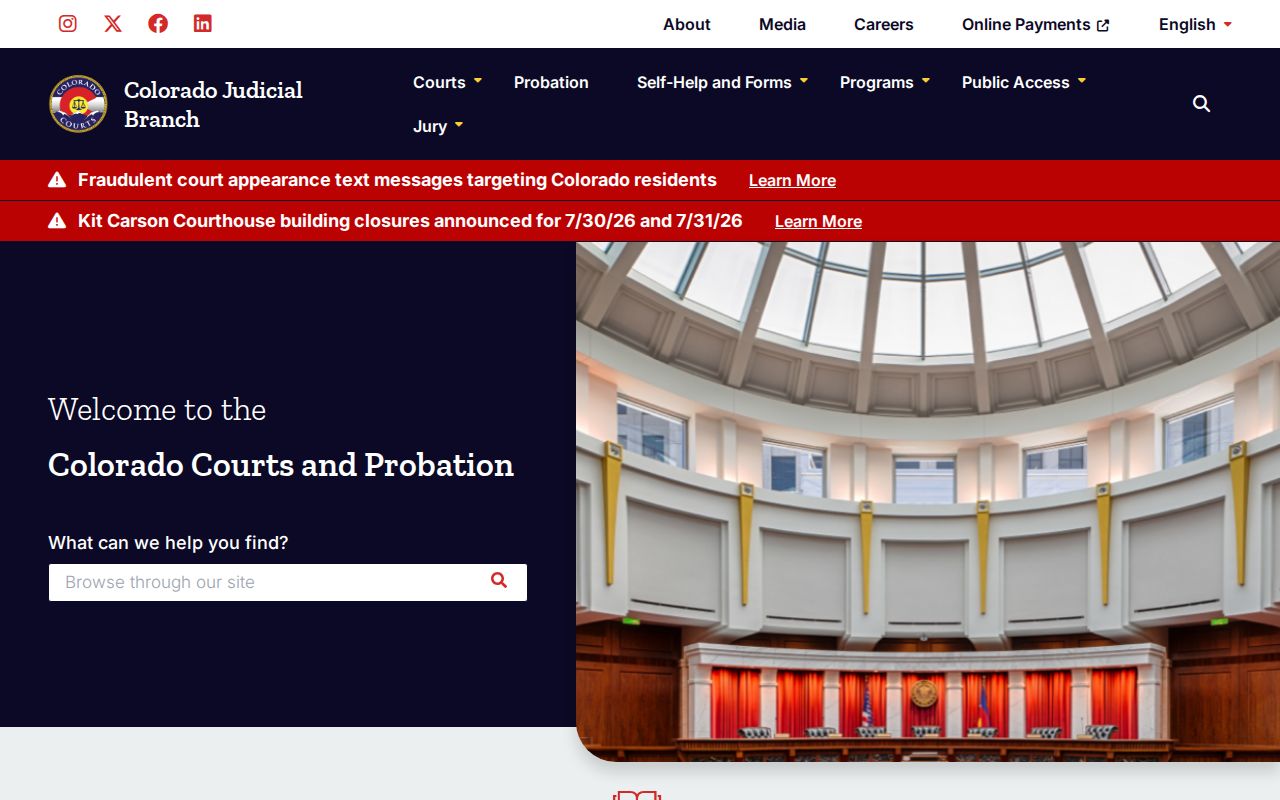
The source view helps readers recognize the official route before paying for electronic Colorado court information.
Mesa Docket Is Not the File
A docket result answers when and where a matter is set. It may not display the charging instrument, motion, signed order, plea terms, or sentence. For those, ask the Mesa County clerk for the Register of Actions and the exact filed document. This distinction matters when a hearing moved, a count was amended, or a case has several defendants.
Online absence is not proof that no case exists. The case may be municipal, sealed, older, entered under a different spelling, or missing from that day's schedule. Use the clerk counter and phone as fallback channels. For a police narrative or arrest report, ask the agency that created it. Court custody begins with filed case material, not every fact gathered by investigators.
Inside a Mesa County Case File
A court case file is charge-specific. Read each count and its current status rather than treating the first allegation as the final result. A dismissal is not an acquittal. A deferred judgment is not the same as a conviction after successful completion. An open Mesa County case has no final outcome yet.
| Case number and court | Identifies the file, county, division, and court level. |
|---|---|
| Charging document | Shows the complaint, information, or indictment and filed counts. |
| Docket entries | Lists hearings, motions, orders, and other events in time order. |
| Parties and counsel | Names case parties, lawyers, and the assigned judge when public. |
| Plea and disposition | Shows the response and outcome for each count. |
| Sentence and obligations | May show custody, probation, fines, fees, and restitution. |
Protected personal data does not belong in the public view. Social Security numbers, full protected birth dates, victim or minor identities, sealed counts, and confidential reports may be withheld or redacted.
Reading Mesa Charge Dispositions
A Mesa County file can resolve different counts in different ways. Copy the exact charge, statute, and status. “Disposition” means the current or final outcome of a count. “Nolle prosequi” records the prosecutor's choice not to continue a charge. “Acquittal” means a not-guilty result, while “dismissal” ends that count without a conviction.
- Deferred judgment
- A plea followed by delayed judgment and possible dismissal after compliance.
- Plea agreement
- A negotiated resolution that still requires court acceptance.
- Concurrent
- Sentences served at the same time.
- Consecutive
- Sentences served one after another.
These terms explain the docket language but do not predict sealing or later consequences. For the broad local record trail beyond the file, the Mesa County criminal history overview explains how court records differ from booking and CBI information.
How a Criminal Case Moves
A state case can start after an arrest or summons. The first appearance addresses initial procedure and bond. The prosecutor then files a complaint or information, or a grand jury returns an indictment. Arraignment addresses the charges and plea. Discovery and motion practice shape what reaches trial or a negotiated plea.
Case flow: Charges Filed › Arraignment › Pretrial › Plea or Trial › Disposition › Sentencing
Post-conviction motions or an appeal may add later entries. Mesa County readers should check the latest docket line and signed order before assuming an old status remains current.
Federal Cases Outside Mesa Court
Federal cases arising from Mesa County do not sit in the combined court file. They belong to the U.S. District Court for the District of Colorado. Its official court page provides federal procedures and locations.
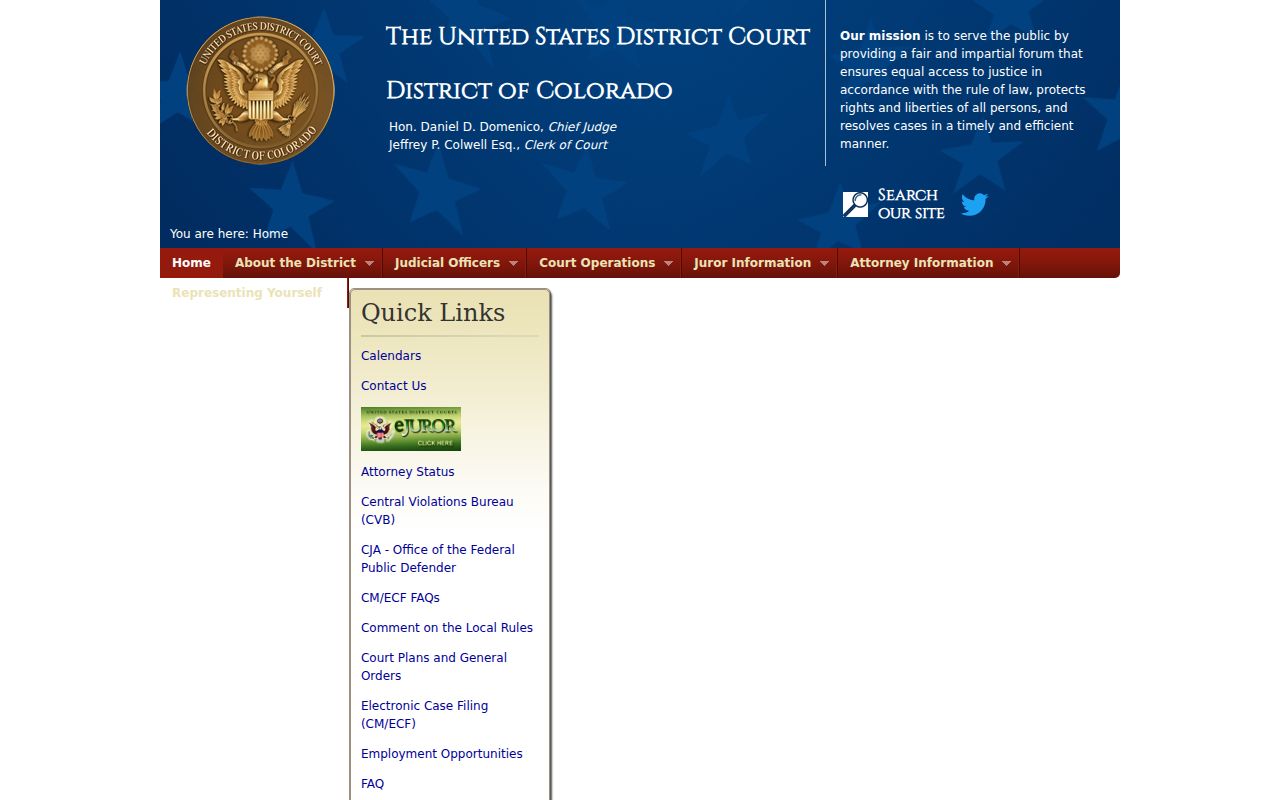
The image marks a separate court system, so a failed Mesa County clerk search should not end a federal inquiry.
PACER supplies federal dockets and documents after registration. PACER generally charges $0.10 per page with a $3 cap per document, subject to its current rules and quarterly fee-waiver threshold.
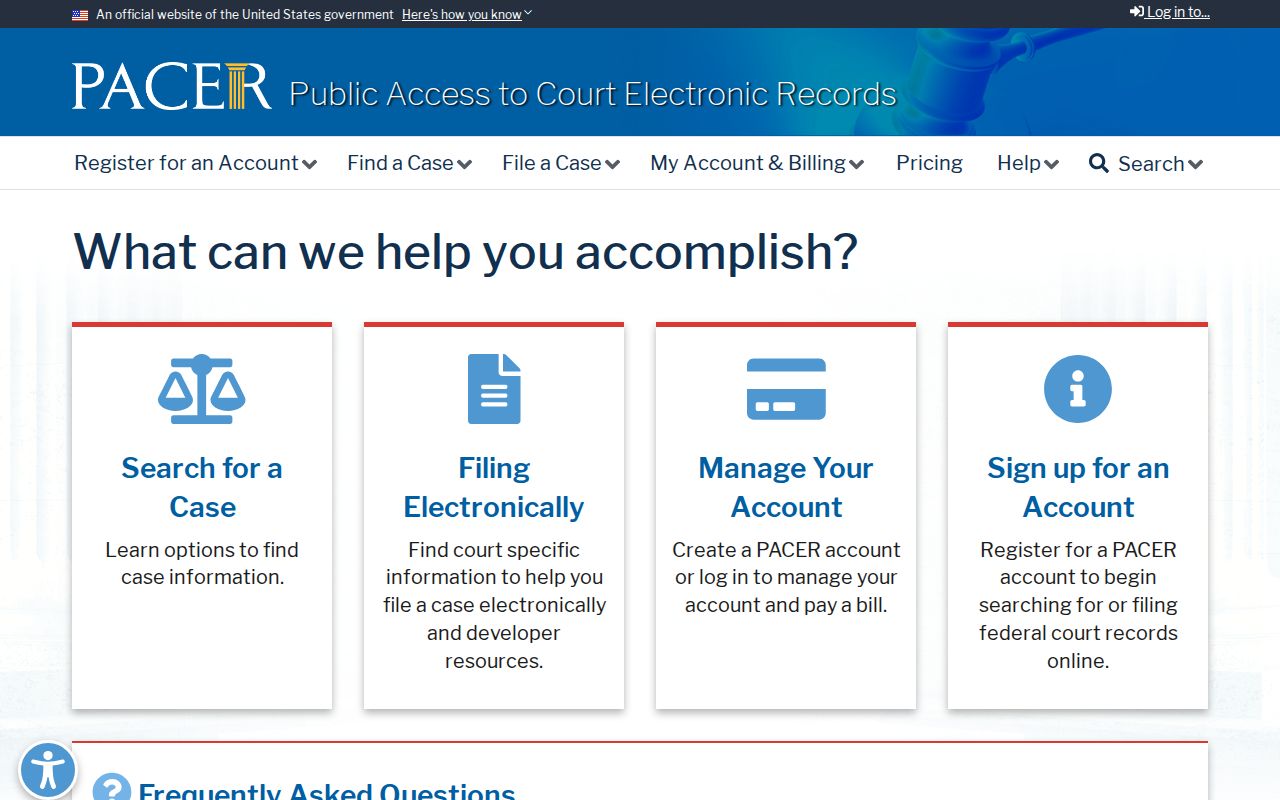
This portal image distinguishes federal paid document access from Colorado's free hearing calendar.
Federal prosecution information comes from the U.S. Attorney's Office for the District of Colorado, not the 21st Judicial District Attorney.
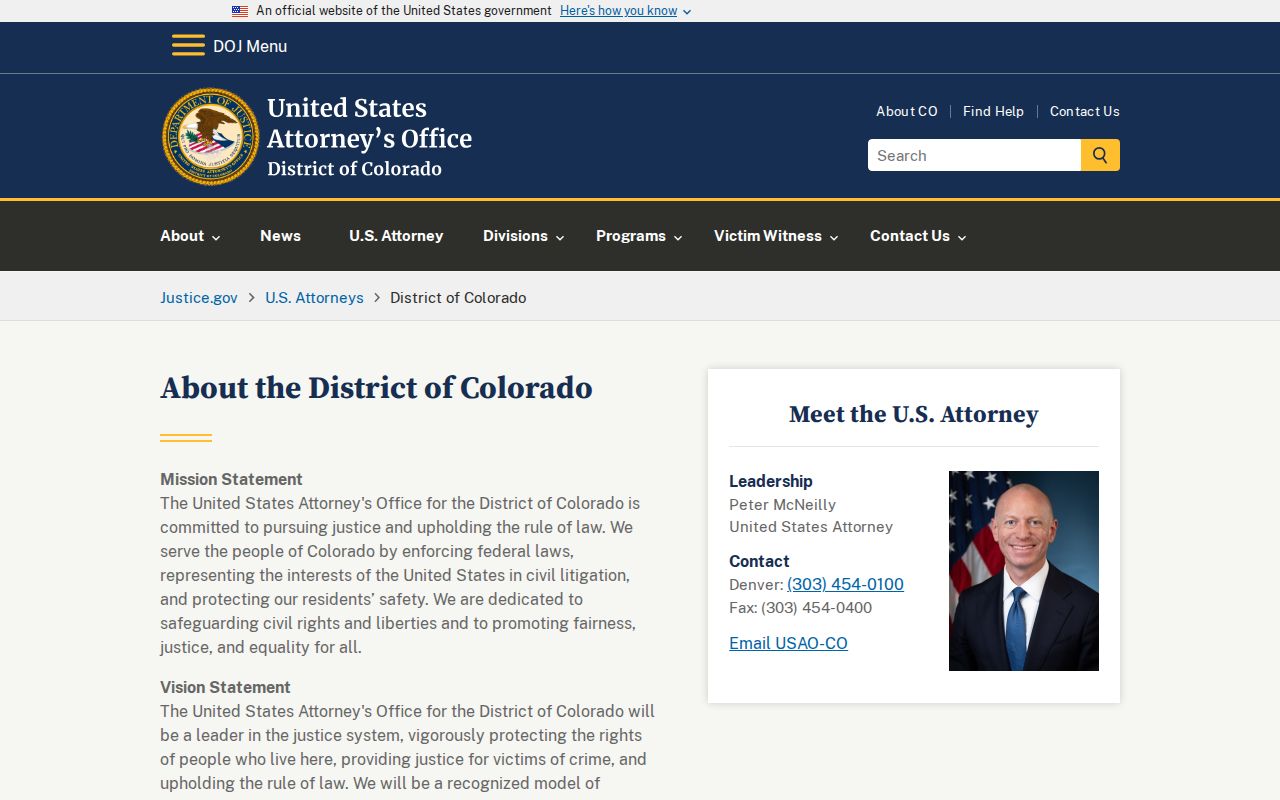
The official source is useful for agency context, but the filed federal case remains in PACER and the federal court.
Mesa Certified Case Copy Route
For an older file or a document not shown online, call the Mesa County Combined Court clerk. Give the case number, party name, and document title or date. Ask for a cost estimate, available delivery method, and processing details. Request the Register of Actions first if the needed filing is not yet clear.
Certified copies come from the court that holds the record. A municipal ordinance case must go to the relevant city clerk. A state felony or misdemeanor goes to the combined clerk. A federal filing comes through the federal court. The arresting agency cannot certify a court judgment simply because it created the original incident report.
Case Record Access and Restrictions
Colorado court access is governed by Judicial Branch access rules, while the Colorado Criminal Justice Records Act controls many law-enforcement records. That division explains why a court filing and an investigative report can receive different treatment. Juvenile information, sealed cases, protected victim data, personal identifiers, and confidential reports may be restricted.
If a Mesa County case does not appear, ask the clerk whether the search scope is the issue. Staff may be able to confirm the correct court or request route without disclosing restricted content. For releasable law-enforcement records, ask the creator and request the legal basis for any withholding. A matching name alone is never proof of identity or guilt.
Note: Online redaction can differ from the clerk's releasable copy, but neither view should expose data that Colorado law protects.